Berlin, 30th September 2025
A new generation of unmanned vessels will soon be patrolling the waters of the Euro-Atlantic area after defence company STARK successfully tested its naval technologies alongside other NATO capabilities.
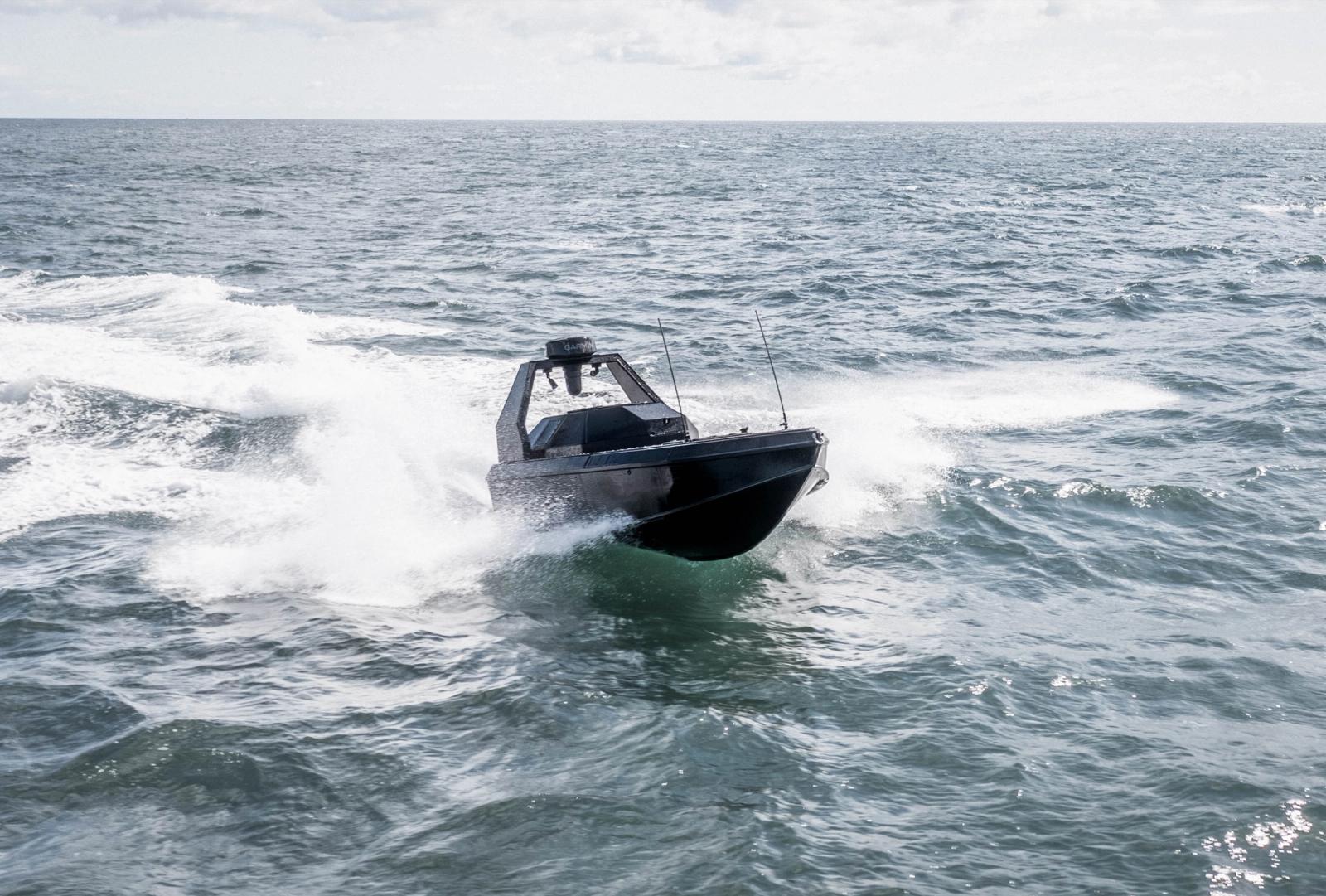
The company introduced its first unmanned surface vessels, the Vanta-4 and Vanta-6, at the REP(MUS)/NATO DYNAMIC MESSENGER exercise in Portugal in September. Designed for affordable mass production and capable of ranges up to 900 nautical miles, the Vanta family of systems enables NATO to field large groups of vessels at once, allowing them to patrol multiple areas simultaneously.
Together, these systems provide the alliance with the ability to monitor Europe’s vast maritime domain continuously, respond rapidly to emerging threats, and do so while keeping personnel out of harm’s way.
The sea is NATO’s next strategic battleground—95% of data flows go through undersea cables and 90% of global trade is seaborne. NATO Allies’ are responsible for approximately 5 million square kilometers of maritime waters in Europe alone. This is an area larger than the entire EU landmass, and existing naval capability gaps and personnel shortages make it impossible to safeguard without innovative technologies.
For nearly one month in the Atlantic waters off the coast of Portugal, STARK’s Vanta-4 and Vanta-6 USVs were rigorously tested alongside both conventional and innovative maritime assets in simulated combat scenarios. Over the course of the exercise, the Vanta systems completed serial missions daily, including escorting high-value targets, conducting harbour control operations, performing over-the-horizon investigations of contacts of interest, and carrying out nighttime ISR patrols.
Through the integration of STARK’s AI command and control software, Minerva, Vanta is designed from the outset for complex, multi-domain operations. Minerva will give the vessels the capability to operate in groups, be deployed interoperably with reconnaissance and strike drones, and integrate onto conventional maritime battle management platforms. This provides the Vanta series of USVs the ability to conduct seamless operations across land and sea.
Managing Director of STARK International, Philip Lockwood, said:
“When undersea cables are cut, your banking stops working. When shipping lanes are blocked, grocery prices skyrocket. The ocean isn't just important to our security, it is our security. This is a domain where we simply cannot afford to leave ourselves vulnerable.
The Vanta USVs are just the start of STARK’S impact in the maritime domain. We aim to give NATO innovative capabilities to tackle threats at sea through affordable mass—deploying large numbers of vessels to patrol wider areas of responsibility at once, ensuring continuous presence where it matters most.”
Key features of the Vanta-4 (4 metres long) and Vanta-6 (6 metres long) include:
- Superior range and seaworthiness, with the ability to operate reliably in harsh conditions thanks to durable materials.
- Advanced sensor suites including electro-optic and infrared cameras as well as search radar. The Vanta USVs also provide a platform for hosting modular electronic warfare systems.
- Coordinated Intelligence, Surveillance and Reconnaissance, and strike missions across domains when integrated with systems like STARK’s family of loitering munitions.
- (UK only: The UK’s recent Strategic Defence Review highlighted the need to respond to the immediate and pressing threat of undersea warfare from Russia with a ‘new deal’ for the defence of Critical National Infrastructure.)
- (UK only: The Vanta family of systems can quickly transition from intelligence, surveillance and reconnaissance (ISR) missions to strike operations to law enforcement activities. This is crucial for tackling the full range of modern maritime threats, which range from attacks on undersea pipelines to sophisticated smuggling operations carried out in European waters.)